
Erectile Dysfunction: When Sexual Health Speaks for Your Heart
Let’s talk about a topic that can make many men suddenly become very interested in their shoelaces: erectile dysfunction (ED).
But behind the awkwardness is a real and common medical condition. Erectile dysfunction is the persistent inability to achieve or maintain an erection sufficient for satisfactory sexual activity. It is not simply a matter of aging or “being in your head”—ED can involve the blood vessels, nerves, hormones, medications, and overall metabolic health.
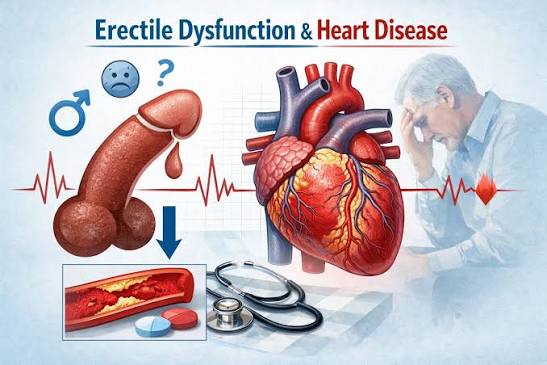
While ED is often considered a purely sexual problem, the biology tells a much bigger story. modern cardiology and endocrinology have revealed a groundbreaking plot twist: Your penis is actually an early-warning radar for your heart.
An erection depends on healthy blood vessels, adequate blood flow, functioning nerves, hormones, and nitric oxide signaling. When any of these systems are affected, erectile function can suffer. This is why ED can sometimes provide an early clue that something is happening with a man's metabolic or cardiovascular health.
What Does an Erection Have to Do With the Heart?
The blood vessels supplying the penis are relatively small compared with many of the major arteries in the body. As a result, changes in vascular health may become noticeable through erectile difficulties before cardiovascular disease becomes clinically obvious.
This is known as the “artery size hypothesis.” It suggests that smaller blood vessels may show the effects of atherosclerosis or endothelial dysfunction earlier than larger vessels. So, when persistent ED appears, the question should not always be only: “How can we treat the erection?” It can also be: “Why is blood flow being affected?”
Where Does Diabetes Enter the Story?
Diabetes can significantly increase the risk of ED. Persistently elevated blood glucose can damage blood vessels and nerves and contribute to endothelial dysfunction, oxidative stress, and impaired nitric oxide signaling. All of these mechanisms can interfere with the vascular changes needed for an erection.
In simple terms: Diabetes → vascular and nerve damage → impaired blood flow → increased risk of ED. And when diabetes and ED occur together, they may signal a higher overall cardiovascular risk.
ED Can Be a Cardiovascular Warning Sign
ED does not mean that a man definitely has heart disease. However, persistent ED—particularly when it develops without an obvious explanation—can be an opportunity to assess cardiovascular risk factors such as blood pressure, blood glucose, cholesterol, obesity, smoking, and physical activity.
The important message is that sexual health and cardiovascular health are not separate systems. They are closely connected through the same network of blood vessels, nerves, hormones, and metabolic pathways.
The Good News
The same lifestyle habits that protect the heart can also support erectile function. Regular physical activity, maintaining a healthy weight, not smoking, eating a balanced diet, controlling blood pressure and cholesterol, and managing diabetes effectively can all contribute to better vascular health.6And when ED requires treatment, effective medical options are available. However, treatment should be individualized, particularly for men with cardiovascular disease or those taking nitrate medications.
The Take-Home Message
ED is not simply a bedroom problem. Sometimes, it can be a window into vascular and metabolic health. If erectile difficulties are persistent or new, talking to a healthcare professional can be an important step, not only for sexual health, but potentially for identifying and managing cardiovascular and metabolic risk factors early.